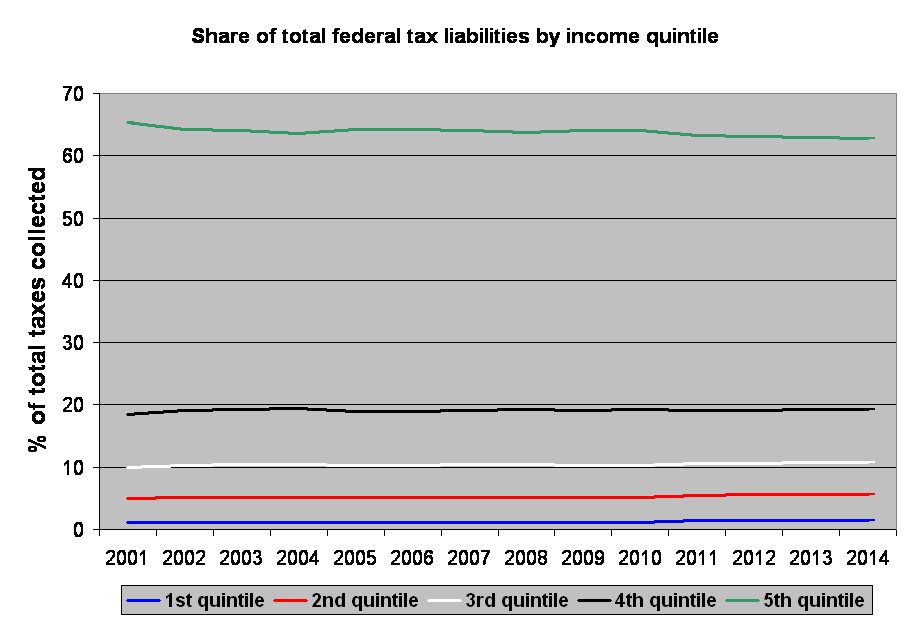
Recently, I created a boring graph tracing the federal tax burden over a 15 year period by income quintile. The story has been and will likely continue to be steady as she goes. There are no intended polemical points in that post or in this one--they're just outgrowths of my ignorance and curiosity.
The following table shows the share of federal tax burden as a percentage of total money income (defined here, a couple of pages down) by quintile in 2010. The bottom quintile, for example, pays 1.1% of all federal taxes and 'earns' 3.3% of total income, for a tax-share-as-a-percentage-of-income-share of 33.3%:
Tax planning aside, the federal income tax is still clearly an extremely progressive one in absolute monetary terms. For it to be regressive, the ordering by income quintile would have to be exactly reversed, which would require a seismic shifting in the current tax code that is almost unimaginable. Even a truly "flat tax", where tax burdens and income shares are perfectly aligned, is contemporarily unthinkable.
The following table shows the share of federal tax burden as a percentage of total money income (defined here, a couple of pages down) by quintile in 2010. The bottom quintile, for example, pays 1.1% of all federal taxes and 'earns' 3.3% of total income, for a tax-share-as-a-percentage-of-income-share of 33.3%:
| Quintile | Tax:Income |
| Bottom | 33.3% |
| Second | 60.0% |
| Third | 70.5% |
| Fourth | 82.1% |
| Top | 127.7% |
Tax planning aside, the federal income tax is still clearly an extremely progressive one in absolute monetary terms. For it to be regressive, the ordering by income quintile would have to be exactly reversed, which would require a seismic shifting in the current tax code that is almost unimaginable. Even a truly "flat tax", where tax burdens and income shares are perfectly aligned, is contemporarily unthinkable.